

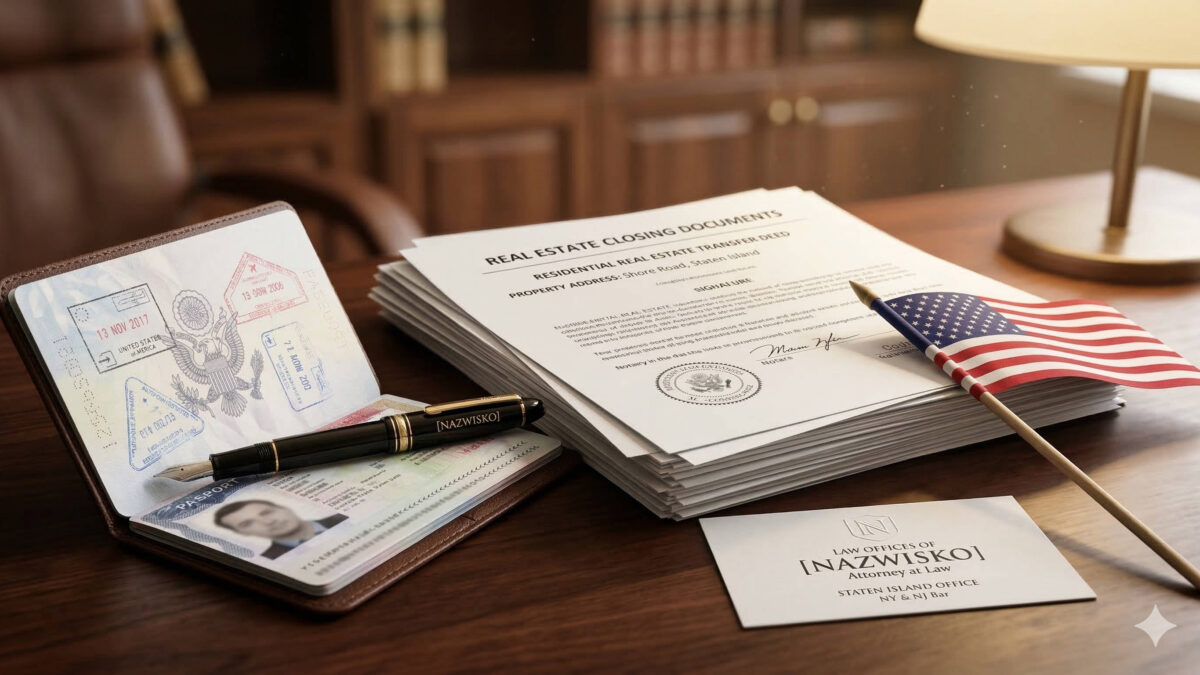
The year 2026 brought a fundamental change to the U.S. immigration system. The Department of Homeland Security (DHS) has ended the era of mass parole programs, which means that every application for resident status, a visa, or citizenship is now screened with unprecedented accuracy. For the Polish-American community on Staten Island and throughout New York, the most important signal is one thing: the system has stopped forgiving mistakes.
Advanced data analytics: The end of the era of minor inaccuracies
In 2026, USCIS implemented verification systems based on advanced data analytics and artificial intelligence. This means that minor, often unintentional discrepancies in employment history, dates of stay, or previous residential addresses are immediately detected.
- History audit: These systems can connect data from various federal and state databases in seconds.
- Risk of rejection: Even an error in a single form from years ago can today become the basis for an allegation of immigration fraud (misrepresentation).
Severe consequences: Lifetime ban on entry for false declarations
A particular area of risk this year is false claims to U.S. citizenship (false claim to U.S. citizenship). In the new legal climate, such a statement – even if made unintentionally, e.g., when filling out a driver’s license or job application – results in a lifetime ban on entry with no possibility of appeal or obtaining a waiver. ### Shortening of Employment Authorization Document (EAD) validity and time pressure Changes have also affected the sphere of livelihood. The reduction of EAD validity to 18 months forces immigrants to maintain almost constant procedural vigilance. Failure to file a renewal application on time in 2026 results in the immediate loss of the right to legal employment, which for many families on Staten Island means financial paralysis.
Laken Riley Act and the increase in deportation procedures (NTA)
The introduction of strict regulations, such as the Laken Riley Act, and a significant increase in the number of issued Notices to Appear (NTA), i.e., summonses to immigration court, shows the government’s new prioritization. The current state apparatus places emphasis on law enforcement and deportation procedures, often at the expense of assimilation processes.
An attorney as your shield in a restrictive system
In the current legal climate, every step – from renewing a Green Card to applying for naturalization – must be preceded by a thorough legal audit. Professional legal assistance in 2026 is not just about filling out forms. It is primarily:
- Risk analysis: Identifying “red flags” in your history before an official sees them.
- Strategy building: Preparing arguments that will anticipate the questions of vetting systems.
- Status protection: Ensuring the continuity of your rights in the U.S. in an era of shortened deadlines.
Understanding the new rules of the game is the only way for your family to safely build a future in America.